Nuclear War Series & AI Simulation
The more you learn the better for you!


The World After Nuclear War
AI Analysis
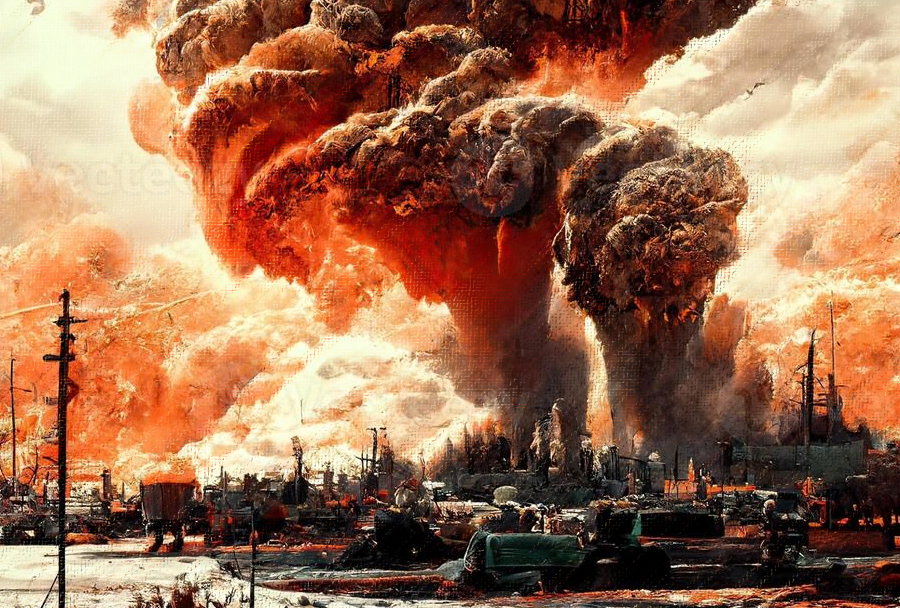
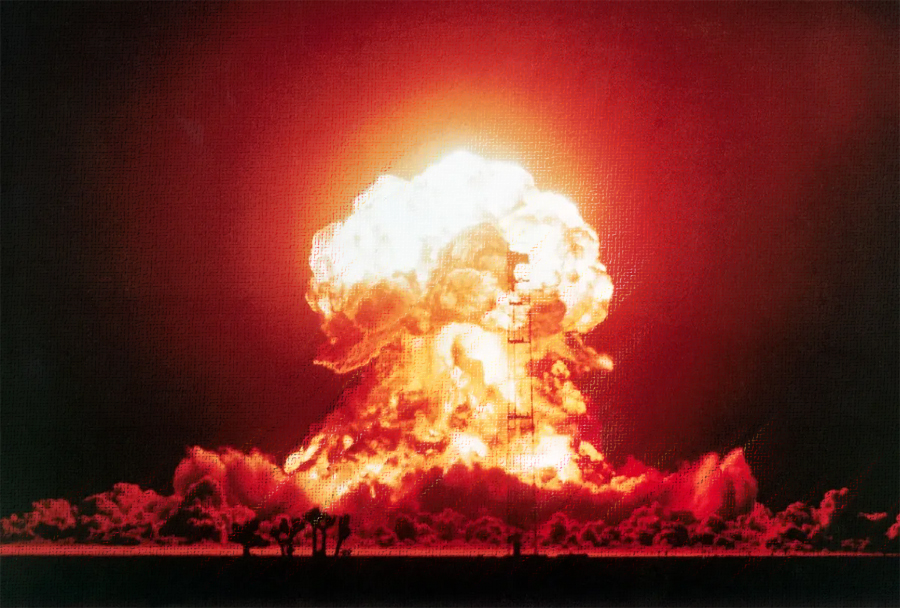


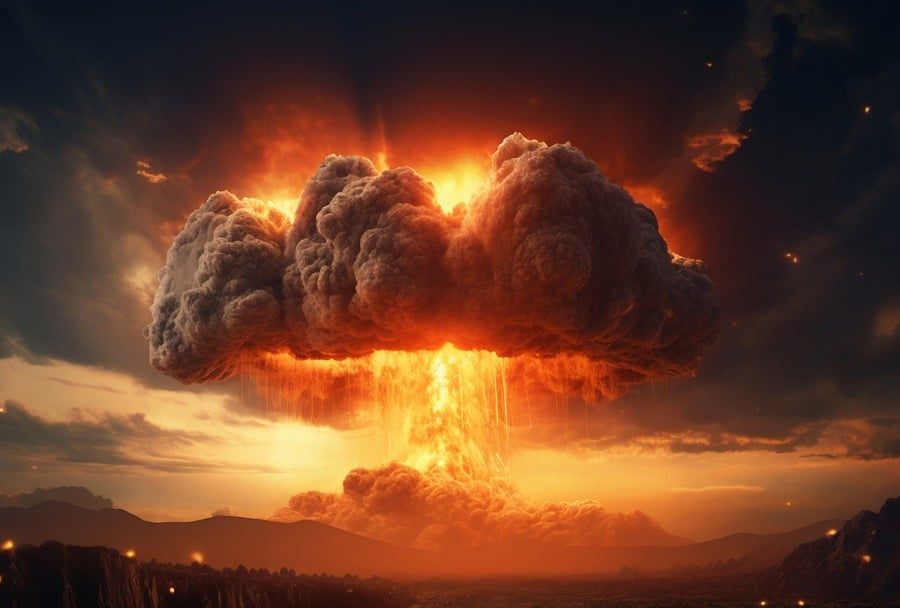

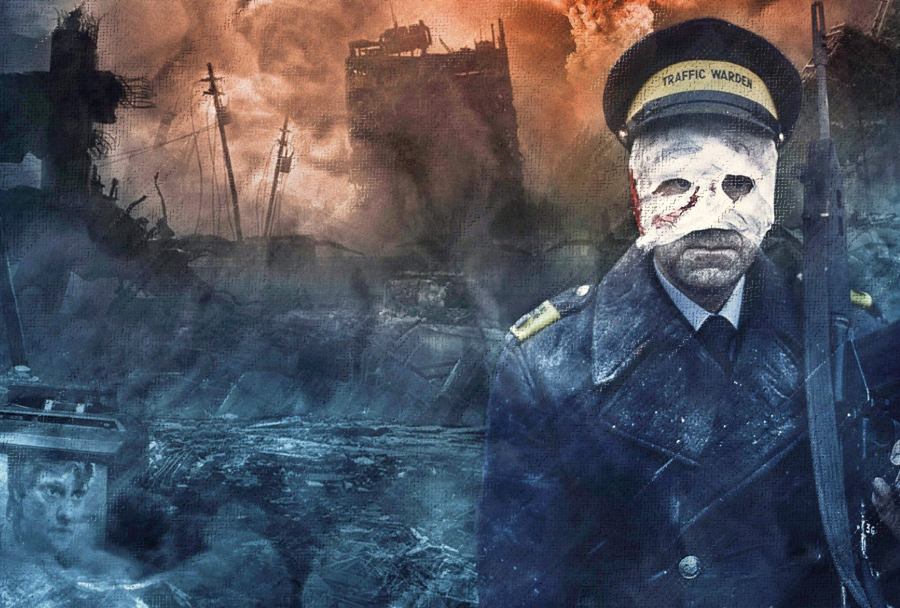
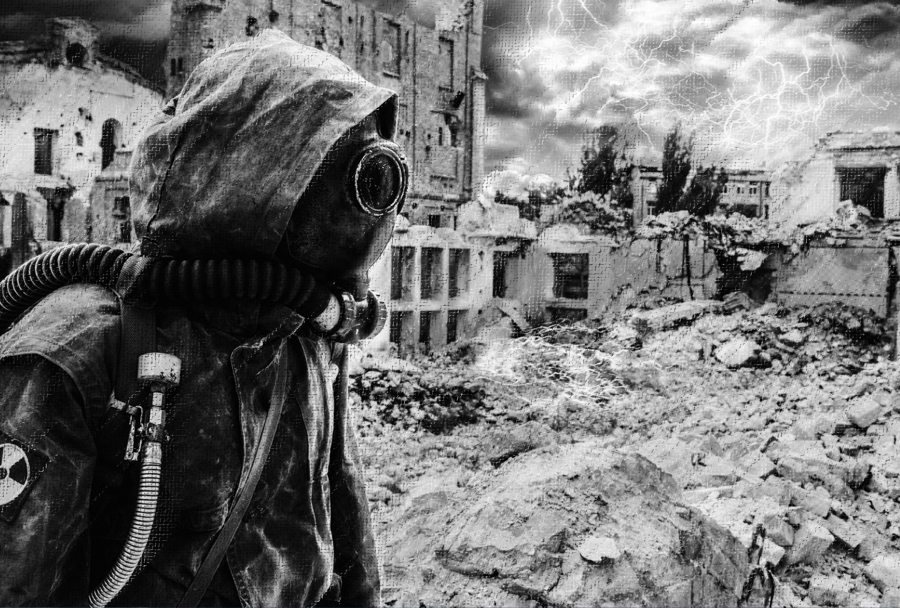
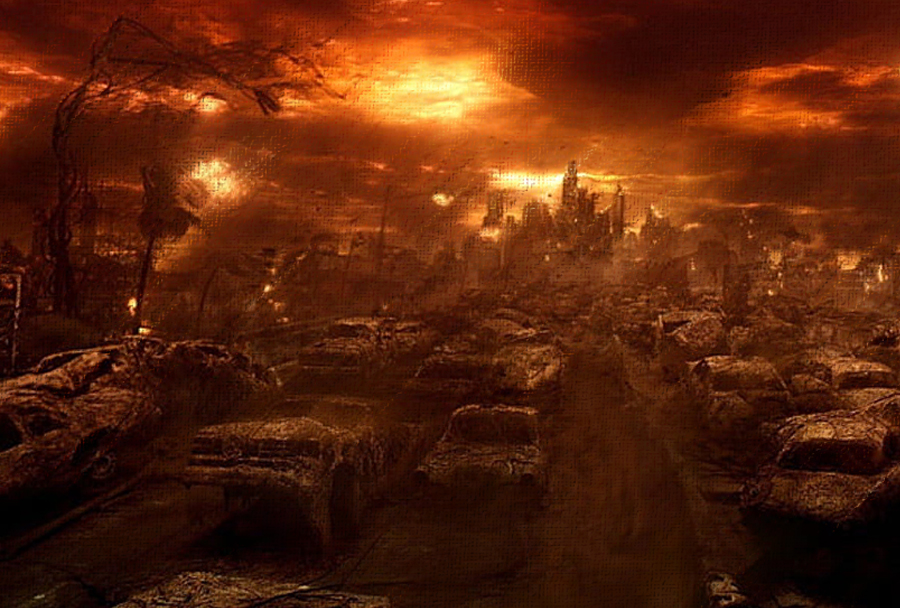
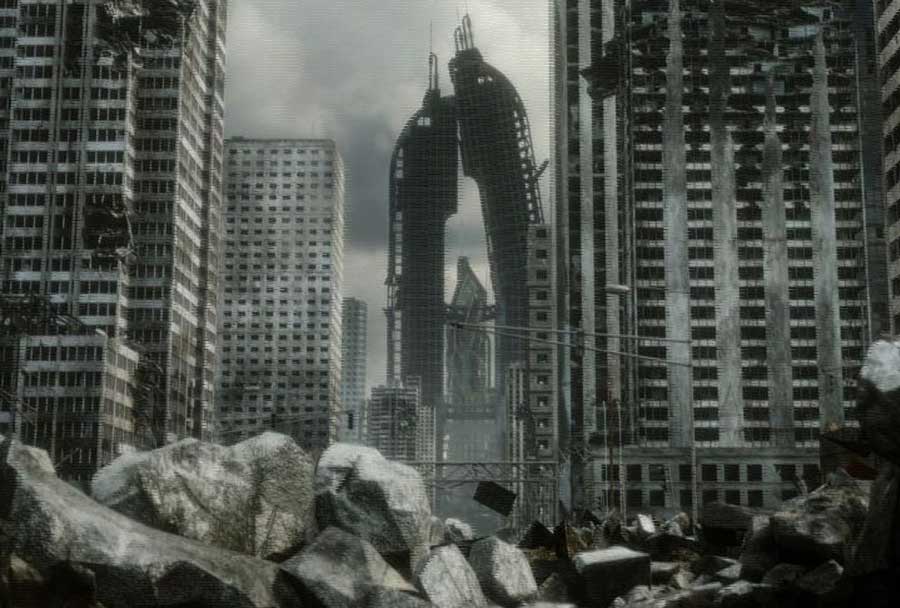
Surviving a Nuclear War (AI Scenario/Analysis)
Surviving a nuclear war involves preparing for both the immediate effects of nuclear explosions, such as blasts and radiation, and the long-term impacts on the environment and infrastructure. Here’s a list of essentials to consider:
1. Shelter: The most critical immediate need is a sturdy, well-constructed shelter that can protect against radiation. Underground shelters or basements of strong buildings are preferable.
2. Water: Store enough water for drinking and sanitation, as water sources may become contaminated.
Experts recommend having at least one gallon of water per person per day for at least two weeks.
Also you will need WATER FILTER STRAW which isideal for emergency preparedness.
3. Food: Stockpile non-perishable food items that require no refrigeration, preparation, or cooking. Aim for a supply that can last at least two weeks to several months.
MRE or DEHYDRATED meals are also a very good solution for such case
4. Radiation Detection Tools: Equip yourself with devices like a Geiger counter, dosimeter, or other radiation detection tools to monitor radiation levels.
5. Protective Clothing and Gear: Have materials such as a gas mask, gloves, and protective eye gear to safeguard against fallout and debris.
6. Medical Supplies: Assemble a comprehensive first aid kit that includes standard supplies along with radiation sickness treatments. Include prescription medications and over-the-counter remedies for common ailments.
7. Communication Devices: Battery-powered or hand-crank radios can help you stay informed, as cell towers and internet might not be operational.
8. Power Sources: Backup power options such as solar chargers, generators, or batteries are essential for long-term electricity outages.
9. Personal Hygiene Items: Stockpile toiletries and sanitation supplies like soap, toothpaste, sanitary wipes, and toilet paper.
10. Important Documents: Keep important documents such as identification, medical records, and bank information in a secure, easily accessible location.
11. Emergency Plan: Have a clear plan for what to do in the event of a nuclear explosion, including evacuation routes and a communication plan with family members.
12. Mental Health Resources: Books, games, and other activities can help maintain morale and mental health during prolonged stays in shelters.
Being prepared also means staying informed about the current geopolitical climate and knowing the nuclear attack response plans of your country or local government.
Creating an effective shelter for protection during a nuclear event involves understanding the threats posed by nuclear blasts, including shockwaves, heat, and radiation. The key goal of a nuclear shelter is to reduce radiation exposure as much as possible. Here are detailed considerations for setting up a nuclear shelter:
1. Types of Shelters
a. Expedient Shelter: Quickly improvised shelters can be made in existing buildings by using heavy materials to block out radiation. This might involve barricading yourself in the middle of a building, ideally in a basement, using dense materials like sandbags or bricks around you.
b. Permanent Shelter: These are specially constructed to offer protection against nuclear fallout and blasts. They are typically built underground and made with reinforced concrete or other strong materials. These shelters are equipped with air filtration systems and are structurally sound to withstand blasts.
2. Location
- Underground: The more earth you can put between yourself and the outside world, the better. An underground basement of a concrete building can significantly reduce radiation exposure.
- Center of Building: If an underground space isn’t available, the next best place is the center of a building, ideally away from windows and exterior walls.
3. Construction Materials
- Dense Materials: Concrete, bricks, and earth are excellent at absorbing radiation. The thicker these materials, the better the protection.
- Lead and Steel: These materials are particularly good at blocking radiation but are more difficult and expensive to incorporate.
4. Essential Features
- Air Filtration: Nuclear fallout can contaminate the air, so having an air filtration system is crucial. This can be as simple as a hand-operated air pump with filters or more complex mechanical systems.
- Thick Walls and Roof: The walls and roof of the shelter should be thick enough to reduce radiation. A rule of thumb is at least 30 inches of earth, 12 inches of concrete, or 2 inches of lead.
- Waterproofing: To prevent groundwater contamination from entering the shelter.
- Emergency Exit: An alternative way out, in case the primary exit is blocked.
Stocking the Shelter: In addition to construction, the shelter should be stocked with survival supplies like water, food, medical kits, communication devices, and radiation detection tools.
Maintenance: Regular checks and maintenance of the shelter are essential to ensure it remains functional and ready for immediate use. This includes checking structural integrity, air filters, and stockpile expiration dates.
Training and Drills:Familiarize yourself with the shelter and practice going to and using the shelter with all household members. Knowing what to do in advance can greatly increase your chances of survival in the event of an actual nuclear attack.
Building or identifying a suitable shelter is a significant part of preparing for a nuclear disaster, and these steps can help ensure you are as protected as possible.
AI Analysis Based on March 2025 international situation
As of March 2023, the world was in its most dangerous nuclear environment since the Cold War, mainly because of the Russia-Ukraine war, the weakening of arms-control mechanisms, and growing great-power rivalry involving the United States, Russia, and China. The UN warned at the time that the risk of nuclear weapon use was higher than at any point since the depths of the Cold War.
1. Main drivers of nuclear risk in March 2023
A. Russia-Ukraine war was the central trigger
The biggest nuclear danger in March 2023 came from the war in Ukraine. Russian officials had repeatedly used nuclear rhetoric, and on February 21, 2023, President Putin announced that Russia was suspending participation in New START, the last major remaining U.S.-Russia strategic arms-control treaty. That did not mean immediate treaty collapse, but it significantly reduced transparency, trust, and verification.
B. Belarus deployment increased signaling pressure
On March 25, 2023, Putin said Russia would station tactical nuclear weapons in Belarus. Militarily, this did not radically change the strategic balance, but politically it raised escalation pressure, shortened warning perceptions in Europe, and signaled that Moscow wanted to keep the nuclear threat visible in the conflict.
C. Arms control was eroding
SIPRI assessed that by 2023 the world was entering a “new and more dangerous phase” in arms control, while operational nuclear weapons were beginning to rise again. SIPRI’s January 2023 estimates put Russia at about 5,889 total warheads and the U.S. at about 5,244, with both still dominating global nuclear inventories.
D. Nuclear facility risk in Ukraine added a second layer of danger
The war also created unprecedented danger around nuclear power sites in Ukraine. SIPRI noted that never before had operating nuclear power plants been attacked or occupied in this way during interstate war. This was not the same as nuclear war, but it increased the risk of a radiological disaster, misperception, panic, and escalation.
E. U.S.-Russia-West confrontation risk remained significant
The U.S. intelligence community assessed in early 2023 that escalation of the war into a direct Russia-West military confrontation carried risks “the world has not faced in decades,” and that Russian military setbacks could trigger further escalatory actions.
2. Most plausible nuclear scenarios in March 2023
In March 2023, a full global nuclear war was still unlikely, but limited nuclear use was no longer unthinkable. The most credible scenarios were these:
Scenario 1: Nuclear coercion without use
This was the most likely scenario.
Russia would continue nuclear threats, force posture signaling, treaty suspension, and symbolic deployments to deter deeper NATO involvement and pressure Ukraine and the West psychologically. That is largely what the March 2023 environment pointed to.
Scenario 2: Demonstration detonation or very limited tactical use
This was less likely, but credible enough to worry policymakers.
A state under severe battlefield or regime pressure could consider a demonstrative detonation, or a very limited tactical strike, to shock opponents into backing down. In the March 2023 context, analysts were most focused on Russia as the actor with both motive and arsenal flexibility for that kind of escalation. The U.S. threat assessment also noted that Russia values nonstrategic systems as tools to control escalation and counter conventional forces.
Scenario 3: Accidental or unintended escalation
This was one of the most dangerous pathways.
Not because leaders wanted all-out nuclear war, but because fog of war, false signals, strikes near strategic assets, cyber interference, or misread intentions could trigger a fast-moving crisis. Reduced inspections under New START and broader political breakdown made this pathway more dangerous.
Scenario 4: Direct NATO-Russia war leading to strategic exchange
This was the least likely but most catastrophic scenario.
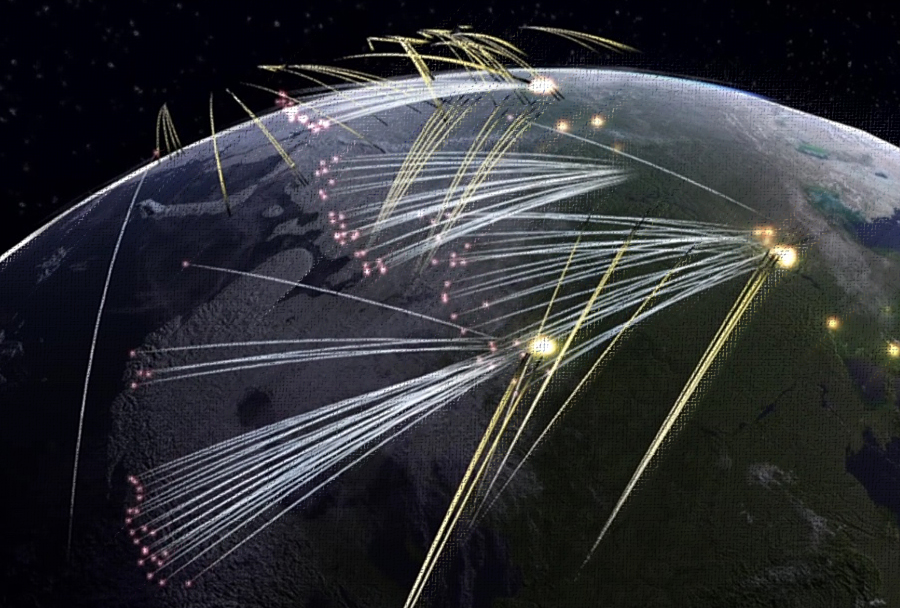
March 2023 did not suggest that either side wanted full nuclear war. But if the Ukraine war widened into direct Russia-NATO combat, the risk of escalation into strategic nuclear exchange would rise sharply. U.S. intelligence explicitly warned that a Russia-West military confrontation would carry risks not seen in decades.
3. What March 2023 suggested about actual likelihood
A balanced assessment for March 2023 specifically would be:
- Strategic all-out nuclear war: low probability, extreme consequence.
- Limited tactical nuclear use in or around the Ukraine theater: low but materially real probability.
- Nuclear coercion, signaling, deployments, threats, and arms-control deterioration: high probability.
- Accidental escalation or radiological crisis around nuclear infrastructure: medium concern.
So the real picture in March 2023 was not “nuclear war is imminent,” but rather: the taboo against nuclear use was under visible strain, and the system was becoming more brittle.
4. Role of China in March 2023
China was not the immediate nuclear trigger in March 2023, but it mattered strategically. Xi Jinping’s March 2023 visit to Moscow showed that Russia was not fully isolated and that Beijing was willing to deepen political alignment with Moscow while presenting itself as a peace actor. Reuters noted that the summit produced language favorable to Russian diplomatic positioning without constraining Russia militarily. That reduced Western hopes for quick de-escalation through Chinese pressure.
5. Bottom-line assessment
As of March 2023, the most realistic nuclear-war scenario was not an immediate U.S.-Russia apocalypse, but a dangerous escalation ladder centered on Ukraine. The ladder looked like this:
- War continues in Ukraine
- Russian battlefield stress increases
- Nuclear rhetoric and deployments intensify
- Arms-control transparency weakens
- Risk of mistake, miscalculation, or limited nuclear use rises
- Only if direct NATO-Russia war followed would strategic nuclear exchange become a serious near-term danger
Final conclusion
March 2023 was a period of elevated nuclear danger, but not of inevitable nuclear war.
The greatest risk was limited nuclear escalation, coercive signaling, and miscalculation, not deliberate civilization-ending exchange. What made the moment especially serious was the combination of:
- Active major war in Europe,
- Nuclear rhetoric by a major nuclear power,
- Weakening arms-control architecture,
- Pressure on nuclear infrastructure,
- And worsening trust between the main nuclear powers.
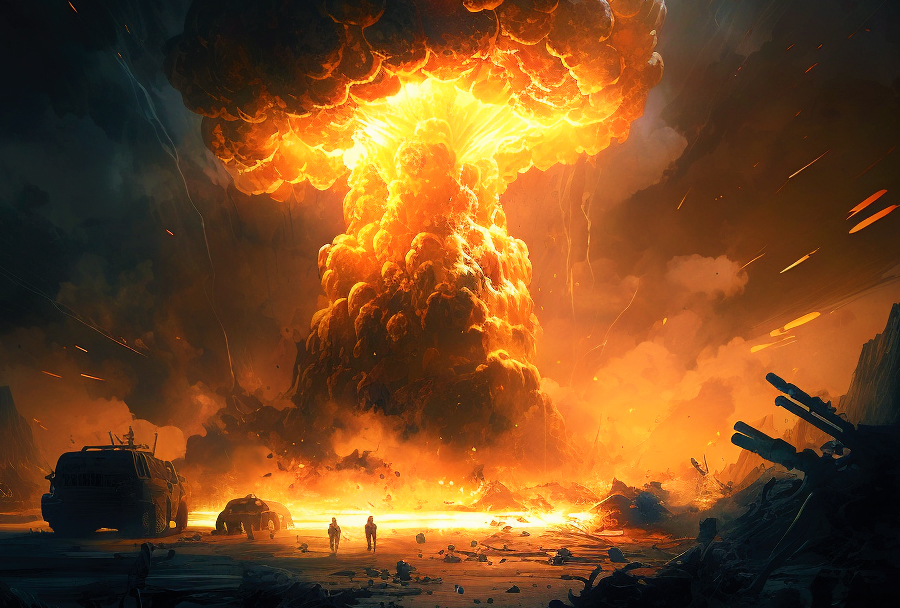
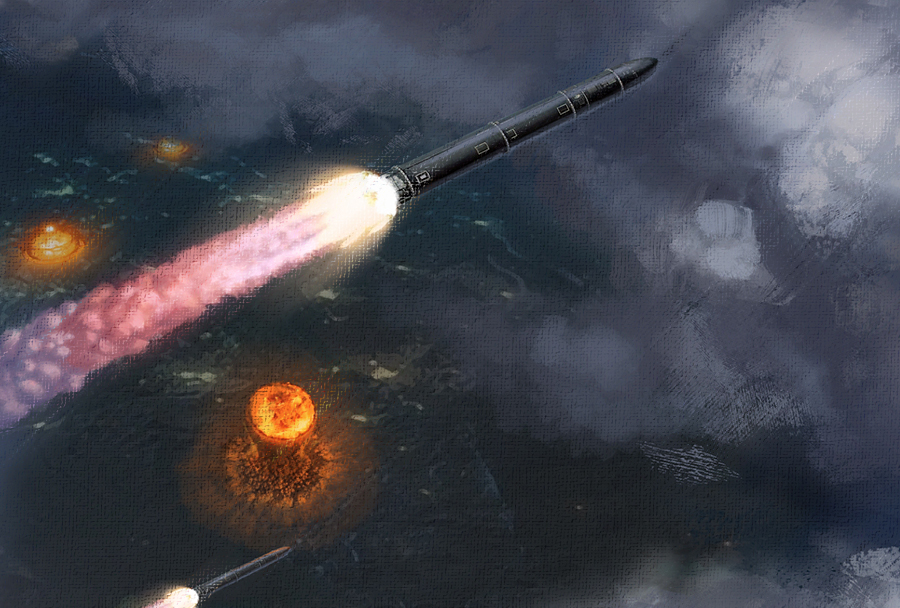
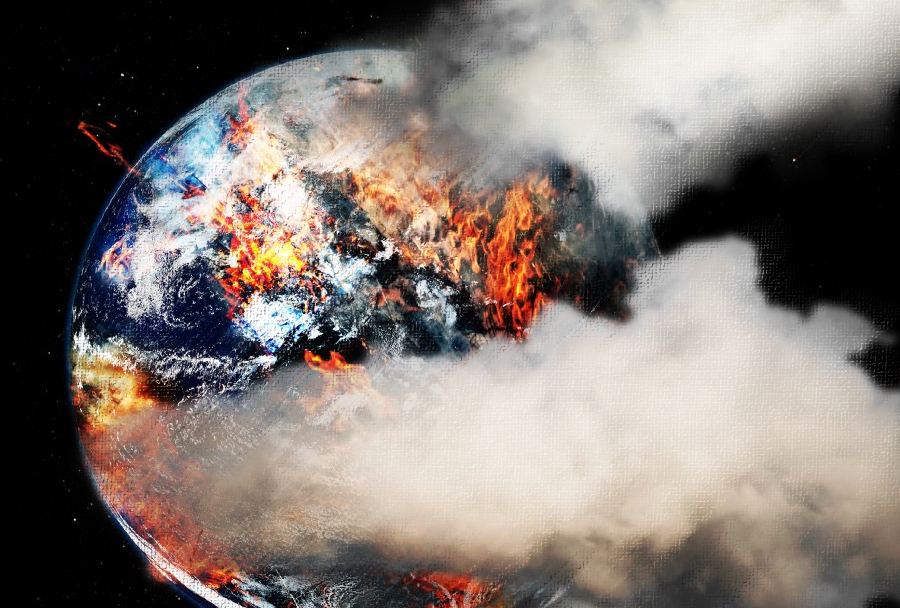
In the wake of a catastrophic nuclear war, the world as we know it would be irrevocably transformed.
The once thriving global civilization would be reduced to ruins, leaving survivors to navigate a harsh and hostile environment.
This article explores the potential aftermath of such a cataclysm, examining the social, environmental, and economic impacts that would shape the post-apocalyptic world.
1. Environmental Devastation
Radioactive Wastelands
The immediate aftermath of nuclear detonations would leave vast areas contaminated with radioactive fallout. Cities like New York, Moscow, Beijing, and Tel Aviv would become uninhabitable wastelands, their populations decimated and infrastructure obliterated.
The radiation would render large swathes of land dangerous for decades, if not centuries, making agricultural production impossible in these regions.
Nuclear Winter
The massive release of soot and ash into the atmosphere from nuclear explosions and subsequent fires would block sunlight, leading to a phenomenon known as nuclear winter. Global temperatures would plummet, causing severe disruptions in climate patterns.
This drastic cooling would result in shortened growing seasons and widespread crop failures, triggering a global famine that would further strain the already limited resources of the surviving population.
2. Economic Collapse
Destruction of Infrastructure
The infrastructure supporting global economies would be annihilated.
Power grids, transportation networks, communication systems, and financial institutions would cease to function.
The intricate web of international trade and commerce would collapse, plunging the world into an economic dark age.
Survivors would revert to barter systems, trading whatever scarce resources they could find.
Scarcity of Resources
The scarcity of resources would lead to intense competition and conflict among survivors.
Clean water, food, medical supplies, and basic necessities would become precious commodities.
In the absence of functioning governments, local warlords and criminal gangs would rise to power, controlling resource-rich areas and imposing their rule through violence and intimidation.
3. Social Disintegration
Breakdown of Social Order
The societal structure as we know it would disintegrate.
Governments, unable to cope with the scale of the disaster, would lose their authority.
Law enforcement and public services would collapse, leading to widespread chaos and anarchy.
Communities would become isolated, and trust in institutions would erode as people struggle to survive.
Psychological Trauma
The psychological impact on survivors would be profound.
The trauma of losing loved ones, witnessing mass destruction, and enduring constant threats to survival would leave deep scars.
Mental health issues, including post-traumatic stress disorder (PTSD), depression, and anxiety, would be widespread.
The sense of shared humanity and cooperation would be challenged by the brutal reality of survival.
4. Technological Regression
Loss of Knowledge
The destruction of educational institutions and research facilities would result in a significant loss of knowledge.
Scientific and technological advancements made over centuries would be lost or rendered useless without the infrastructure to support them.
The survivors would be forced to relearn basic skills, relying on pre-industrial methods of agriculture, medicine, and engineering.
Limited Communication
With global communication networks down, isolated communities would have little to no contact with the outside world.
Knowledge exchange and collaboration would be severely hampered, further slowing any potential recovery and rebuilding efforts.
5. Path to Recovery
Small Communities and Self-Sufficiency
Survivors would likely form small, self-sufficient communities, focusing on sustainable living and resource management.
These communities would prioritize agricultural practices suited to the altered climate and develop local solutions to their challenges.
Cooperation and mutual aid within these communities would be essential for survival and rebuilding.
Rebuilding Trust and Cooperation
Over time, efforts to rebuild trust and cooperation between communities would emerge.
Survivors would recognize the need for collective action to address shared challenges.
New forms of governance might evolve, based on direct democracy and local leadership, as people seek stability and order.
Preservation of Knowledge
Efforts to preserve and disseminate knowledge would be crucial.
Libraries, archives, and remaining experts would become invaluable resources.
Education would focus on practical skills and the transmission of essential knowledge to future generations, ensuring that the mistakes of the past are not repeated.
Conclusion
The aftermath of a nuclear war would plunge humanity into a dark and desperate era.
Environmental devastation, economic collapse, social disintegration, and technological regression would define the post-apocalyptic reality.
Yet, amid the bleakness, the resilience and adaptability of the human spirit would shine through.
The survivors, scarred but determined, would strive to rebuild their world, driven by the hope of a better future.
This stark reminder of the potential consequences of nuclear conflict underscores the urgent need for global disarmament and the pursuit of lasting peace.
Nuclear War Risk Matrix
Baseline: International Situation – March 2023
| Scenario | Trigger Conditions | Probability (Mar 2023) |
Impact Level | Early Warning Indicators | Strategic Implications | Mitigation / Controls |
|---|---|---|---|---|---|---|
|
1. Nuclear Signaling / Coercion (No Use)
|
Continued battlefield pressure on Russia; need to deter NATO escalation. | HIGH | MEDIUM |
|
Maintains deterrence but normalizes nuclear threats; weakens global non-proliferation norms. |
|
|
2. Tactical Nuclear Demonstration (Non-battlefield)
|
Severe military setback; need to shock adversary into negotiation. | LOW–MEDIUM | VERY HIGH |
|
First nuclear use since 1945; triggers global crisis; high pressure for response. |
|
|
3. Tactical Nuclear Use in Ukraine Theater
|
Collapse of conventional lines; perceived existential threat to regime. | LOW | EXTREME |
|
NATO response dilemma; high escalation ladder risk; potential for rapid conflict expansion. |
|
|
4. Accidental / Miscalculation Escalation
|
Misinterpreted strike, cyber interference, false warning systems. | MEDIUM | EXTREME |
|
Fast, unintended escalation; limited decision time; high risk of chain reaction. |
|
|
5. NATO–Russia Direct War → Strategic Exchange
|
Direct military confrontation, including NATO troops engaged directly with Russian forces. | LOW | CATASTROPHIC |
|
Full-scale nuclear exchange possible; civilization-level impact. |
|
|
6. Nuclear Incident at Civilian Facility (Radiological)
|
Fighting near nuclear plants, including shelling, power loss, or damage to safety systems. | MEDIUM | HIGH |
|
Environmental disaster; public panic; potential escalation trigger. |
|
|
7. China Strategic Alignment Shift
|
Deepened China–Russia cooperation under Western pressure. | LOW–MEDIUM | HIGH |
|
Strengthens anti-West bloc; prolongs conflict; complicates deterrence. |
|
|
8. Arms Control Collapse (Post-New START)
|
Continued suspension or withdrawal from strategic arms control agreements. | HIGH | HIGH |
|
Arms race dynamics; increased uncertainty; higher miscalculation risk. |
|
Probability Scale
| Level | Meaning |
|---|---|
| LOW | Unlikely but possible |
| LOW–MEDIUM | Limited but credible risk |
| MEDIUM | Realistic / plausible scenario |
| HIGH | Expected / ongoing / strongly credible |
Impact Scale
| Level | Meaning |
|---|---|
| MEDIUM | Political, economic, or psychological disruption |
| HIGH | Major regional consequences |
| VERY HIGH | Severe global shock and escalation pressure |
| EXTREME | Critical escalation with large-scale military implications |
| CATASTROPHIC | Existential / civilization-level consequences |